
Breast Reconstruction Surgery
Every breast reconstruction is different. My role is to guide each patient through the reconstructive journey, balancing oncological safety, surgical options and personal priorities to achieve the best long-term outcome.
Introduction
Breast reconstruction is a complex and highly individual process following breast cancer treatment or risk-reducing mastectomy. Reconstruction may be performed at the time of mastectomy (immediate reconstruction) or at a later stage (delayed reconstruction), and can involve implant-based techniques, the use of a patient's own tissue, or a combination of both.
Dr Raymond approaches breast reconstruction with an emphasis on careful assessment, patient education, technical precision, and long-term support. Breast reconstruction is rarely a single operation, but rather a reconstructive journey that unfolds over time. Outcomes are optimised when care is delivered within a well-coordinated, experienced multidisciplinary team.
Breast Reconstruction
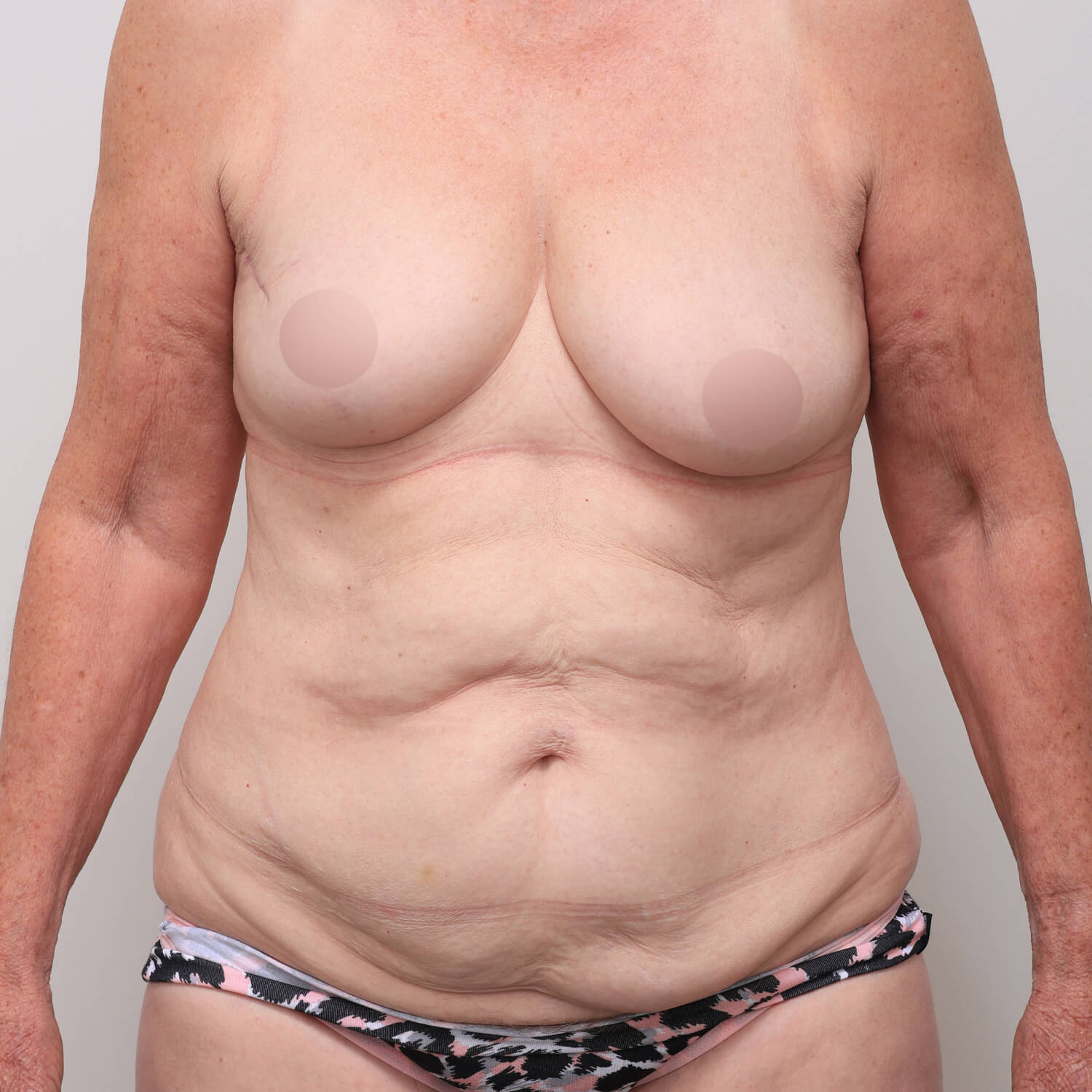
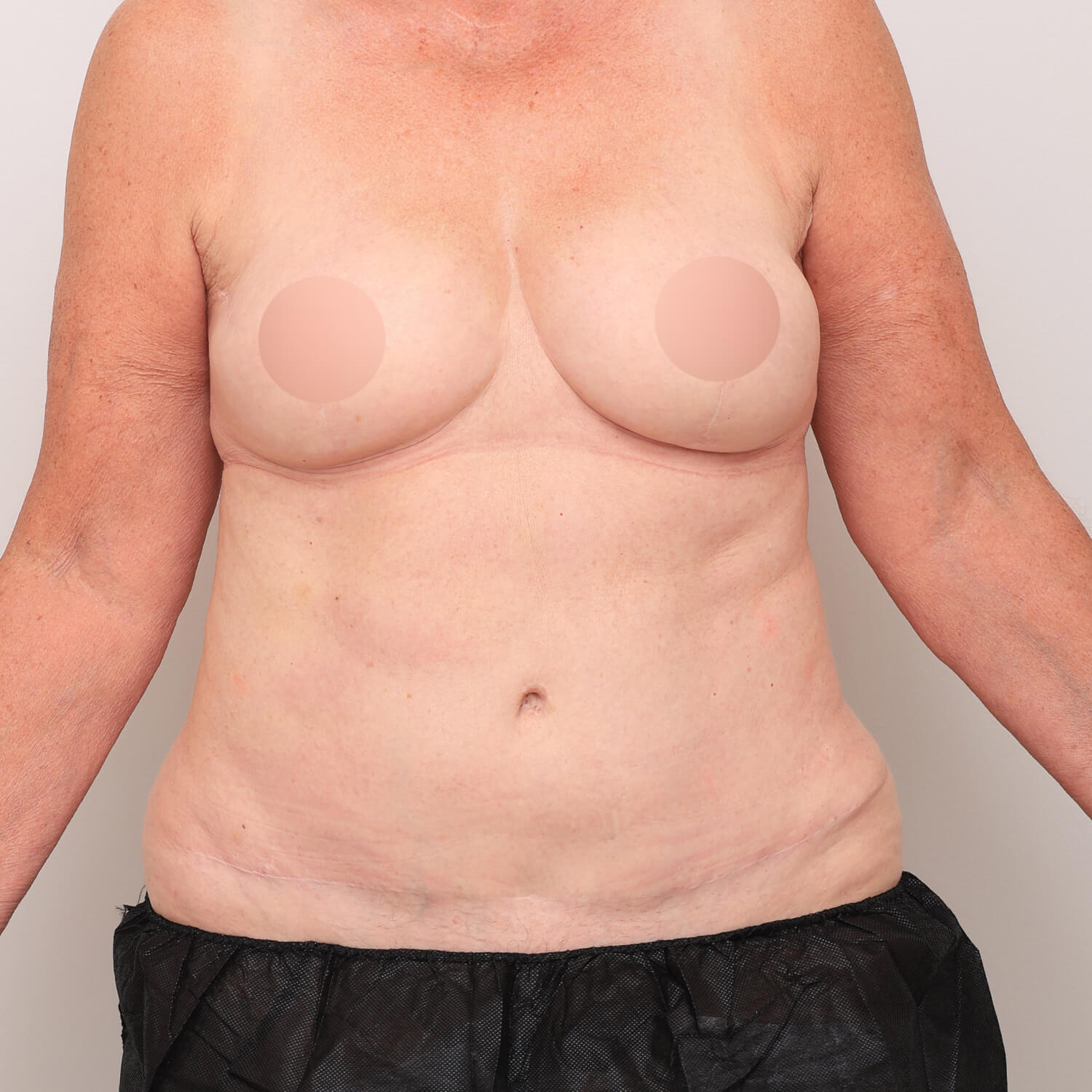
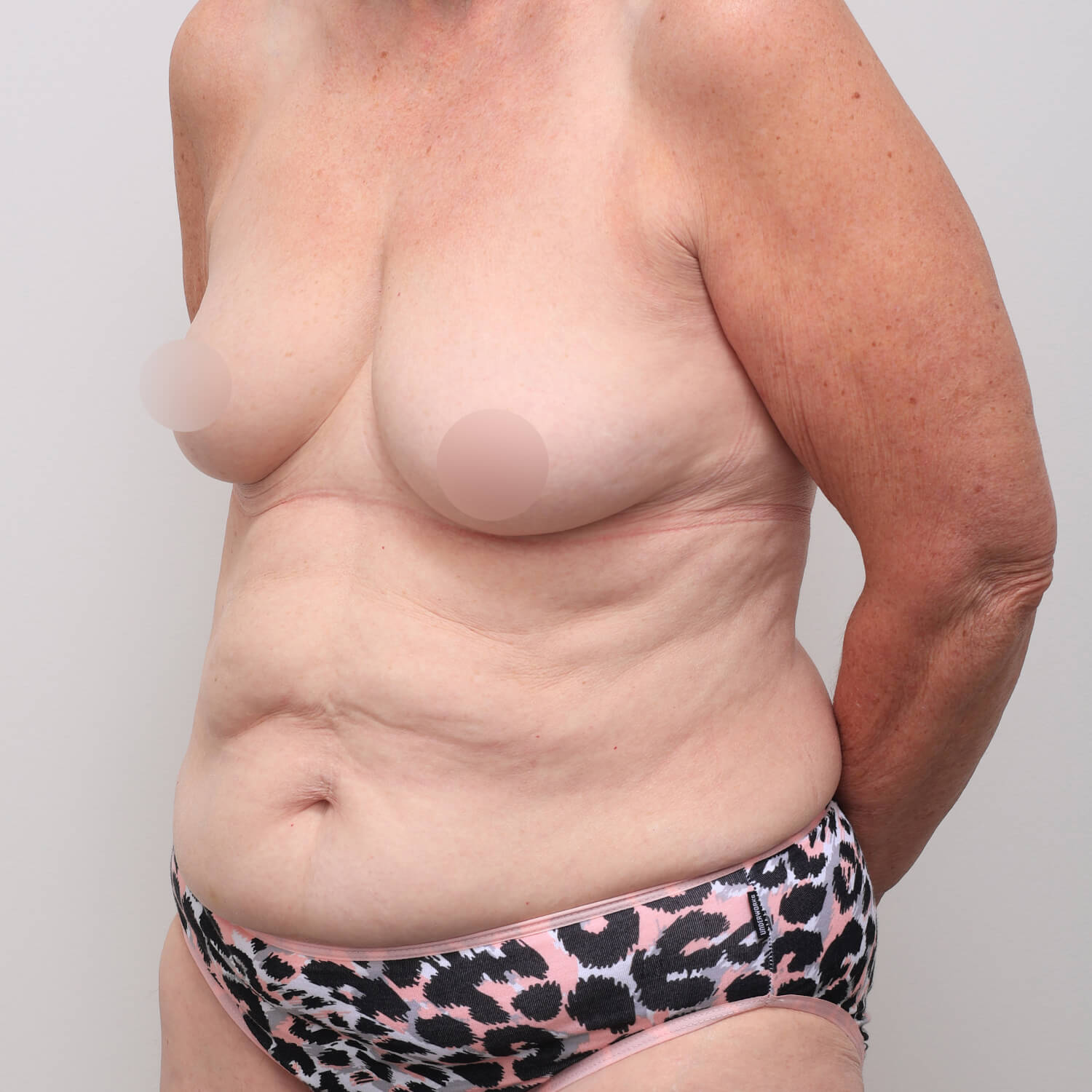
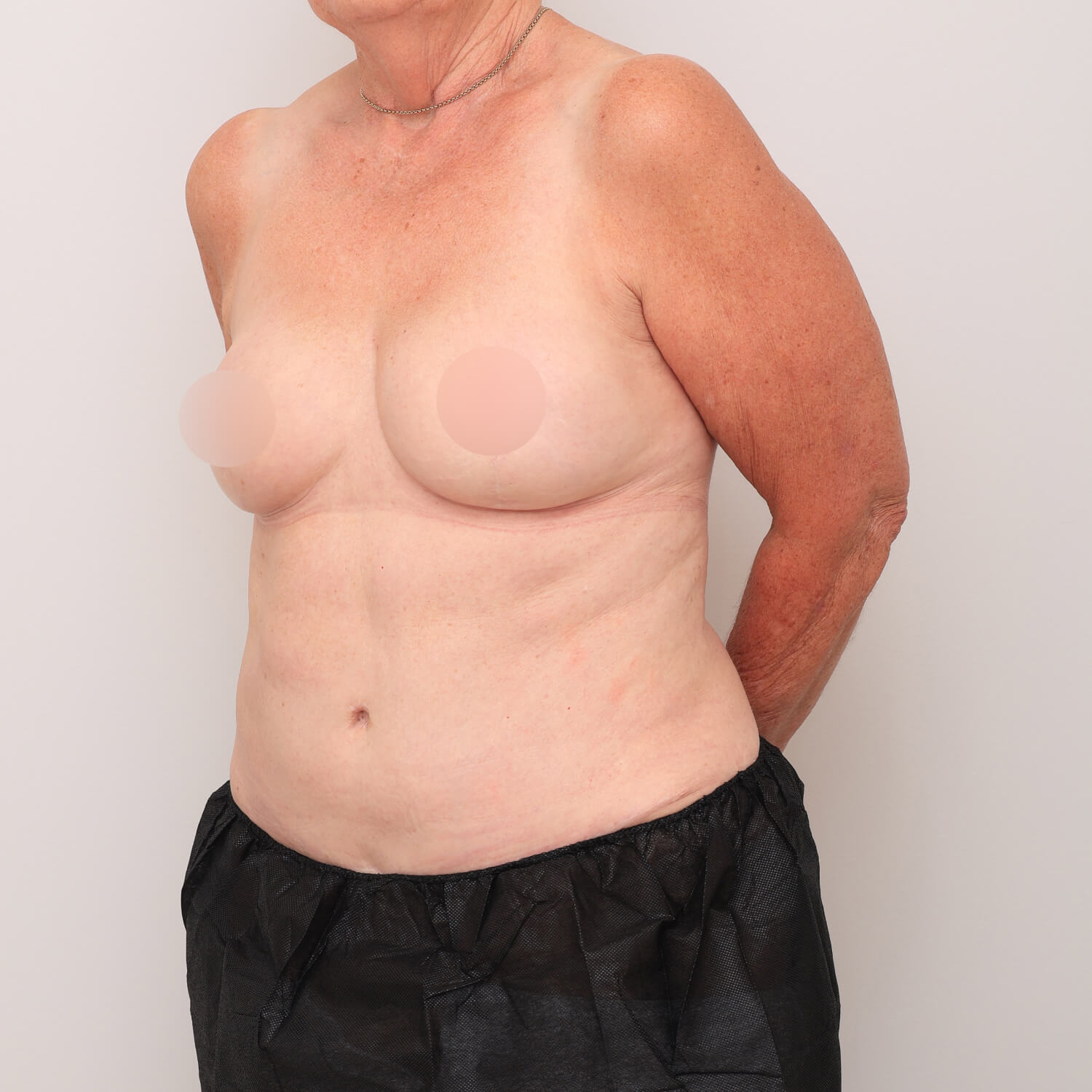
69 year old woman
3 years post Bilateral Mastectomy + Immediate Diep Reconstruction
2 years post Bilateral Nipple reconstruction
6 weeks post Paramedical Nipple areola Tattoo
THE PROCEDURE
Breast reconstruction surgery is performed under general anaesthetic and is most commonly undertaken at Newcastle Private Hospital.
Dr Raymond works with a regular, highly experienced theatre and anaesthetic team, and collaborates closely with local breast surgeons and oncologists. Where reconstruction is performed at the time of mastectomy, breast surgeons from across the region attend Newcastle Private Hospital to perform the cancer surgery, allowing immediate reconstruction to proceed in a coordinated and seamless manner. Close collaboration with treating oncologists is an important part of planning reconstruction alongside cancer treatment.
Dr Raymond also performs breast reconstruction within the public health system as part of the Plastic Surgery Breast Reconstruction Unit at Calvary Mater Newcastle. Patients referred through the public system are assessed and followed within the Mater clinic and are not guaranteed choice of surgeon.
THE PROCESS
Breast reconstruction begins with comprehensive consultation and education, allowing patients time to understand the available options and how reconstruction integrates with their cancer treatment and recovery.
Each reconstruction begins with careful assessment and patient education. Particular emphasis is placed on:
- Understanding a patient's diagnosis and oncological pathway
- Reviewing imaging and planned treatments
- Discussing reconstructive options, timing and trade-offs
- Preparing patients for the staged nature of reconstruction
Reconstruction options broadly fall into implant-based reconstruction and autologous (tissue-based) reconstruction.
THE PROCESS - Implant Based Reconstruction
Implant reconstruction may be performed as:
- Single-stage reconstruction, where an implant is placed at the time of mastectomy
- Two-stage reconstruction, where a tissue expander is placed initially and later exchanged for a permanent implant
Implant-based reconstruction may be appropriate for selected patients depending on body type, cancer treatment (including radiotherapy), skin quality, and personal preference. In some cases, implant reconstruction is combined with mesh or biological support materials.
THE PROCESS - Autologous Reconstruction (DIEP Flap)
Autologous reconstruction uses the patient's own tissue to reconstruct the breast. The most advanced and commonly performed technique is the DIEP (Deep Inferior Epigastric Perforator) flap.
In DIEP reconstruction, skin and fat from the lower abdomen are transferred to the chest to reconstruct the breast while preserving the abdominal muscles. This is a highly specialised microsurgical procedure requiring advanced training and experience.
Dr Raymond and his team have established one of the region's most experienced DIEP flap reconstruction services, offering this procedure to suitable patients wishing to avoid implants or requiring reconstruction following radiotherapy.
DIEP reconstruction involves:
- Increased surgical complexity
- Microsurgical reconstruction of blood vessels
- A small but real risk of flap failure, which is discussed during consultation
The principal advantage of DIEP reconstruction is a durable, natural breast reconstructed using your own tissue, without many of the long-term considerations associated with breast implants, such as future replacement surgery or ongoing implant surveillance.
THE PROCEDURE
Your breast augmentation surgery will be done under general anaesthetic, in fully accredited private hospitals. The procedure is a single day procudure and a soft, supportive bra with front fastening for ease of use will be fitted post-operatively.
THE RECOVERY
Recovery following breast reconstruction varies depending on the technique used.
Implant-based reconstruction generally involves an easier early recovery, as there is no donor-site surgery. DIEP reconstruction involves recovery from both the chest surgery and abdominal donor site, which may require additional support early on.
Hospital stay and overall recovery timelines are individualised and are not necessarily longer for DIEP reconstruction, but the nature of recovery differs between techniques.
Across all reconstruction types, Dr Raymond and his team provide extensive post-operative support, including:
- Regular in-person follow-up
- Close monitoring of healing and reconstruction progress
- Coordination with breast surgeons and oncologists
- Referral to experienced allied health professionals, including physiotherapy and occupational therapy, where required
Patients are supported throughout the full reconstructive process, including planned secondary procedures where appropriate.
Treatment Risks
All surgery carries risk. Risks specific to breast reconstruction may include:
- Bleeding or infection
- Wound healing complications
- Implant- or flap-related complications
- Asymmetry or contour irregularities
- Delayed healing
- Need for revision surgery
- Need for further surgery
The nature and likelihood of risks vary depending on the reconstructive technique used and individual patient factors. These risks are discussed in detail during consultation. Further information is available on our dedicated Treatment Risks page.
Revision and Refinement Surgery
Breast reconstruction commonly involves revision or refinement procedures to optimise symmetry, contour, and overall appearance.
These procedures are typically:
- Assessed from around three months following initial reconstruction
- Performed at approximately six months or later, once tissues have settled
Most revision procedures are performed as day surgery with relatively little downtime, helping refine the overall reconstructive result.
Where revision or refinement surgery forms part of the planned reconstructive pathway, these procedures are typically performed on a no-gap basis, subject to eligibility and clinical circumstances.
Nipple Reconstruction and Tattooing
Nipple preservation or reconstruction is an important consideration in breast reconstruction.
In some patients, the native nipple can be preserved depending on oncological safety, breast shape and surgical factors. In other cases, the nipple must be removed as part of cancer treatment.
Where the nipple has been removed, options include:
- Leaving the breast without a nipple
- Paramedical tattooing alone
- Surgical nipple reconstruction followed by tattooing to recreate the nipple-areolar complex
Where appropriate, paramedical nipple-areolar tattooing is performed within our clinic by Elissa, a trained paramedical tattoo specialist who works closely with Dr Raymond as part of the reconstruction team. This allows the final stages of the reconstructive journey to be completed within our practice.
Patients who have undergone breast reconstruction previously or elsewhere are also welcome to enquire about paramedical tattooing services.
Pricing
Breast reconstruction is highly individualised. The overall cost depends on the reconstructive technique, whether one or both breasts are reconstructed, and whether surgery is performed immediately or as a delayed reconstruction.
For this reason, every patient receives a personalised written quotation following consultation.
Insurance
Breast reconstruction is offered to patients with appropriate private health insurance for the relevant Medicare item numbers. These requirements are discussed during consultation once the reconstructive plan has been established.
Due to the complexity and cost of reconstruction, self-funded breast reconstruction is not offered. Patients who are not appropriately insured are referred to the public health system.
As a guide (bilateral reconstruction)
Direct-to-implant reconstruction
Estimated Total Upfront: $9,000–$11,000
Approximate Out-of-Pocket*: $7,000–$8,500
Two-Stage (Expander to Implant) Reconstruction
Estimated Total Upfront: $19,000–$21,000
Approximate Out-of-Pocket*: $14,000–$16,000
DIEP Flap Reconstruction
Estimated Total Upfront: $35,000–$40,000
Approximate Out-of-Pocket*: Approximately $25,000
*Following applicable Medicare and private health fund rebates.
All-inclusive reconstruction quotes incorporate:
- Dr Raymond's surgeon fee
- Second consultant surgeon fee where required (including DIEP reconstruction)
- Anaesthetic fees
- Hospital admission (covered by private health insurance)
- Post-operative garments
- Routine post-operative follow-up appointments
- Scar care products
- LED light therapy for scar optimisation
- Direct nursing support throughout recovery
Medicare and private health fund rebates are processed after surgery and estimated rebates are discussed during consultation.
PROFESSIONAL MEMBERSHIPS